Home AI series AI 100 · Piece 1
AI 100 · Piece 1 of 12 · Free · 13 pages
Where your time goes.
One week. One sheet. Every task you do, one line: what it was, how hard, how you felt about it, whether it mattered. On Friday you have the first honest picture of your week, measured instead of guessed. It is the starting point for everything else in AI 100.
Before anything else
You can't automate a week you've never looked at.
Where people go wrong with AI is rarely the tool. It's that they automate a job they never actually looked at, and a broken process, automated, just produces broken results faster.
AI 100 is the foundation: the file an AI has to read before it can do anything useful in your business. The pieces that follow write down who you are, what you sell, to whom, and how you'll know it's working. This one comes first because it needs no preparation, it's about you, and it produces a number. That number won't be impressive. The point is that it exists.
Write down what you do. Ten seconds a line.
Print the sheet
One page. Keep it next to you, or in the truck. No app, no software.
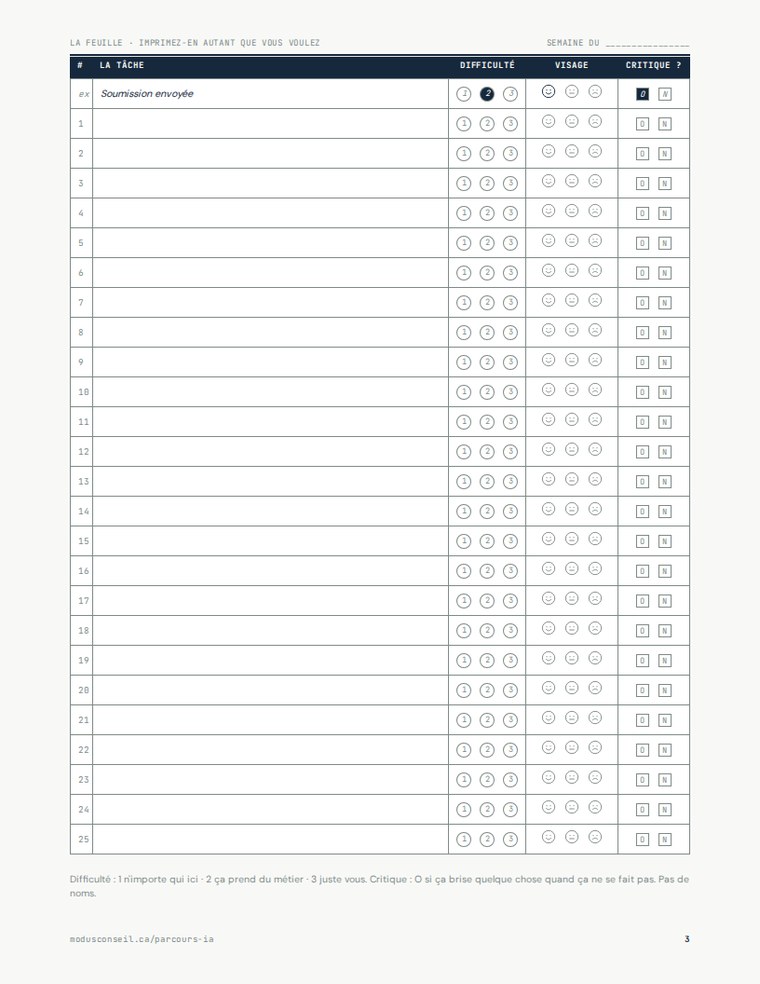
One line per task, one week
What it was, in a few words. Difficulty: 1 anyone here, 2 takes some knowing, 3 only you. A face: liked it, neutral, hated it. Critical: yes if something breaks. No customer names.
Friday, get it sorted
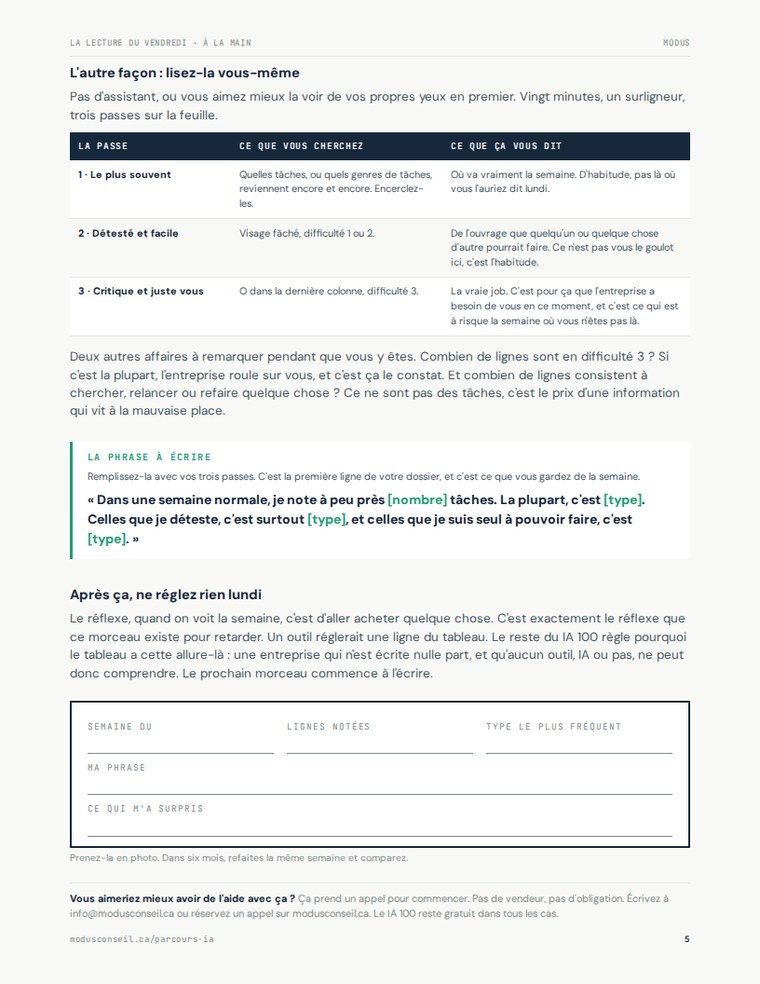
Hand the sheet to whatever AI assistant you already use and paste the prompt from document 2. It groups the week, pulls out what you hate and what only you can do, and writes a paragraph in your own words. No assistant? Document 2 also has the three-pass read you do with a highlighter.
Keep the paragraph. Don't fix anything Monday.
The paragraph is the first line of your business file, a plain text document that grows by a page with each piece. The reflex once you see the week is to go buy something. That's the reflex this piece exists to delay.
If you already use AI
You already have the data. Three prompts read it.
If you, or someone in the business, has had an assistant open for a while, you don't have to wait until Friday.
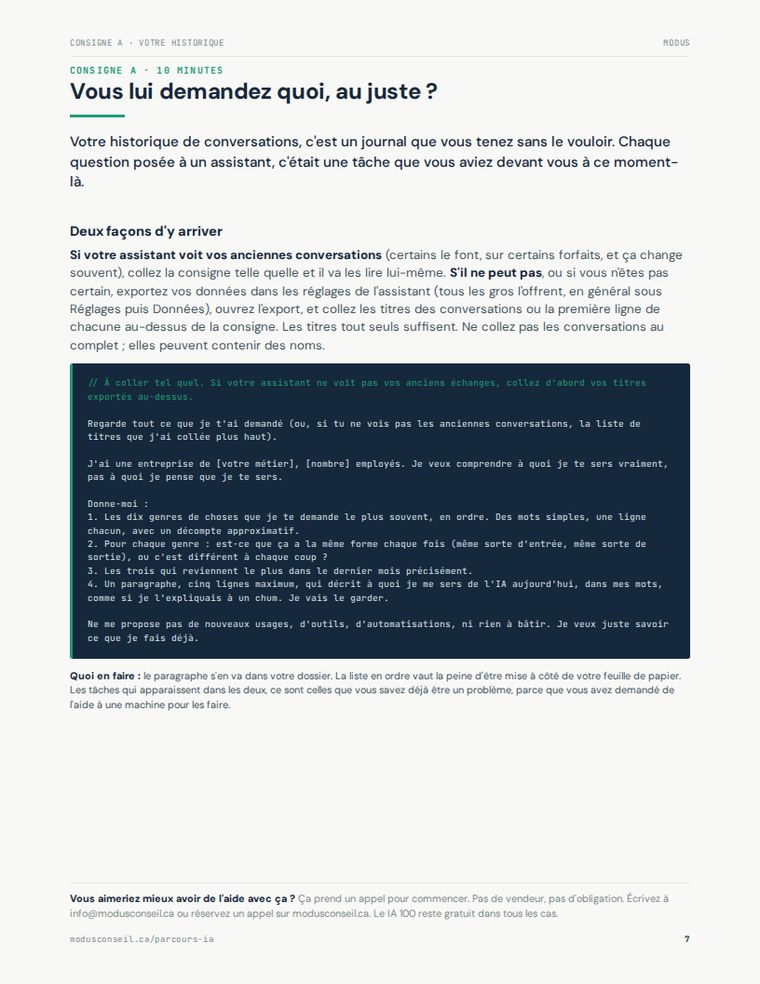
Your chat history
Every question you asked an assistant was a task you had in front of you. One prompt ranks what you ask for most, and says whether it's the same shape every time.
Your sent folder
Not the inbox: the sent folder is what you handled. Two weeks of subject lines, names removed, and the prompt sorts them by type of request. If the business pays for Microsoft 365 or Google Workspace, the assistant already in your mailbox reads the real threads without anything leaving your account. Use that one for email.
The interview
The method all of AI 100 runs on: the assistant asks, you answer, it writes. Fifteen questions about your job. What you're responsible for versus what you end up doing, what interrupts you, what you do twice, what you'd hand off tomorrow, what weighs on you Sunday night. Out loud if your assistant has voice mode.
Before you paste anything
The short version of what's safe to paste into an assistant is on page 1 of the prompts. The long version, which vendor keeps what on which plan, is in Choose your AI without guessing. Don't know what account you're on or what the business pays for? That's a normal place to be, and it's the kind of thing one call sorts out: help me find out what we have.
The people
Someone on your team already uses AI. Ask the right way.
Most businesses with more than three people already have someone using an assistant. On a phone, on a personal account, for work, without telling anyone. That's not a problem to punish: it's the most useful information in the building, and you only get it if people believe it's safe to say.
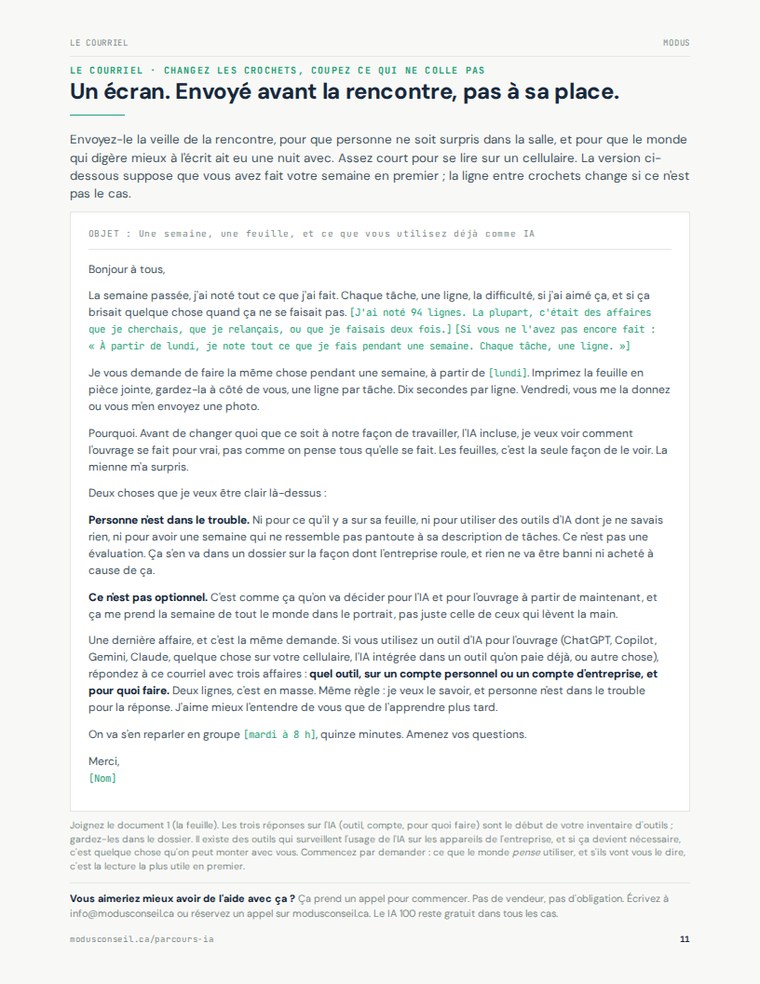
The kit has the email you send the day before and the talking points for a fifteen-minute conversation. The email asks for two things: a week on the sheet, and three lines about AI. Which tool, personal or business account, what for. Two ways to time it: everyone logs the same week, or you do yours first and walk in with your own number.
Ask first, measure later
There are tools that monitor AI use across a company's devices and accounts, and they have their place. It isn't here. Start by asking: what people think they use, and whether they'll tell you, is the first reading, and it tells you as much about the shop as the tools do. If you get to the point where you need the real picture, monitoring is something we can set up with you.
Real pages, not promises.
Where should we send it?
All four documents, in one PDF, in the language you choose. Nothing to pay, nothing to install.
- The link lands in your inbox right away, and the download button appears here too.
- No sales call because of this. If you want to talk to us, you'll write to us.
- We don't sell, rent or trade your address. Ever.
On its way.
The link is on its way to the address you gave. If it hasn't arrived in a few minutes, check your junk folder: that's almost always where it is.
Don't feel like waiting?
Download the PDF now